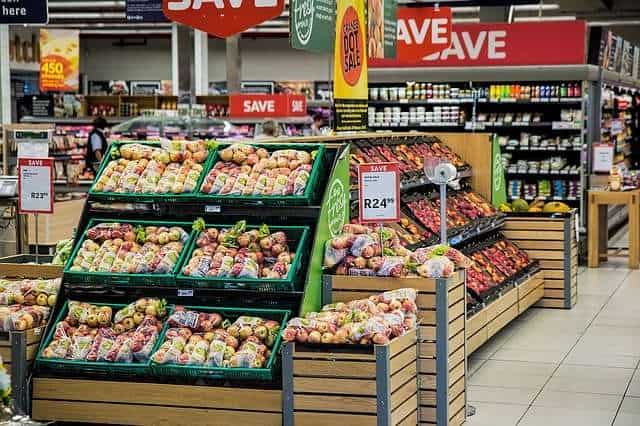
If you’ve noticed your grocery expenses steadily climbing each month, you’re certainly not alone. Between clever store layouts, enticing end-cap displays, and rising food prices, grocery shopping can quickly deplete your budget.
Without knowing how to shop at discount stores and save on groceries, the checkout line can deliver an unpleasant surprise when you glance at the total.
How to Shop at Discount Stores and Save Big on Groceries
How Discount Stores Can Help Your Wallet
Thankfully, there’s a straightforward solution: discount grocery stores. These hidden gems offer considerable savings without sacrificing quality or variety.
Learning how to shop at discount stores and save on groceries can significantly reduce your monthly spending, leaving extra money in your pocket for other priorities.
Understanding Discount Grocery Stores
What Are Discount Grocery Stores?
Discount grocery stores offer quality groceries at lower prices than traditional supermarkets by cutting down on frills like expensive branding, elaborate displays, and costly advertising campaigns.
By understanding how to shop at discount stores and save on groceries, consumers can take advantage of these lower costs, directly benefiting their budgets.
Common Myths About Discount Stores
Some shoppers mistakenly assume discount stores compromise on quality or selection.
In reality, discount stores frequently carry high-quality products—often identical or very similar to those in mainstream supermarkets—just without the flashy packaging and hefty price tags.
Choosing the Right Discount Store
Comparing Popular Discount Grocery Chains
Popular chains like Aldi, Lidl, Grocery Outlet, and Save-A-Lot each have unique strengths.
Aldi is known for affordable organic options, Lidl offers fresh produce and bakery items, and Grocery Outlet provides impressive discounts on brand-name items.
Comparing these stores is essential when learning how to shop at discount stores and save on groceries.
Tips for Finding Your Ideal Discount Store
Visit different local discount stores to evaluate cleanliness, selection, freshness, and pricing. Identifying which store aligns best with your shopping preferences ensures you maximize savings while still enjoying your grocery trips.
Preparing for Your Shopping Trip
Set and Maintain a Grocery Budget
Creating a realistic grocery budget is essential when learning how to shop at discount stores and save on groceries.
Establish a weekly or monthly spending limit and commit to staying within that boundary. Discount stores make budgeting easier by providing predictable, consistently lower prices.
Creating an Effective Grocery List
Always shop with a detailed grocery list. Group items by store sections to streamline your shopping trip, minimize impulse buys, and ensure you purchase only what’s necessary.
Best Items to Purchase at Discount Stores
Stocking Up on Pantry Essentials
Pantry staples like pasta, beans, rice, cereals, canned vegetables, and spices typically cost far less at discount stores.
These non-perishable goods help stretch your food budget and simplify meal prep.
Discovering Value in Frozen Foods
Frozen fruits, vegetables, seafood, and ready-made meals are often exceptional deals at discount grocery stores.
The freezer aisle frequently offers high-quality options at notably lower prices than mainstream supermarkets.
Buying Fresh Produce at Discount Stores
Evaluating Quality and Freshness
Fresh produce at discount stores can rival traditional grocery stores, but quality varies.
Carefully inspect items for freshness, looking for vibrant colors and firm textures to ensure you’re getting the best value.
Smart Ways to Use Discounted Produce
If you spot produce that’s ripe or nearing its prime, consider meal prepping or freezing items.
Overripe fruits make delicious smoothies or baked goods, while vegetables can be quickly transformed into soups or stews, reducing waste and maximizing your savings.
Meats and Dairy: Worth the Savings?
How to Select Quality Meat and Dairy
Discount stores offer competitive pricing on meats and dairy, but vigilance is essential.
Always examine expiration dates, packaging integrity, and color. Purchasing meats nearing their sell-by date for immediate use or freezing can yield substantial savings.
Proper Storage of Discounted Meats and Dairy
Store meats and dairy promptly after purchase. Freeze meats in meal-sized portions and follow safe defrosting methods to maintain quality, flavor, and safety.
Household and Personal Care Essentials
Savings on Everyday Necessities
Discount stores aren’t just beneficial for groceries—they also offer significant savings on household essentials.
Items like cleaning supplies, toiletries, laundry detergents, and paper products are typically more affordable compared to regular supermarkets.
Cautions When Buying Non-food Products
Always check unit pricing and package sizes for household products.
Occasionally, smaller or oddly sized packaging may reduce the perceived savings.
Being attentive to these details helps ensure genuine value.
Store Brands vs. Name Brands
Maximizing Savings with Store Brands
Store brands typically offer excellent quality at a fraction of the price of name brands. Items such as baking ingredients, condiments, cereals, and canned goods frequently have negligible differences compared to pricier alternatives.
Conducting Taste Tests at Home
Perform blind taste tests with family members. Often, people are pleasantly surprised when they prefer the less expensive store-brand products, making it easier to switch permanently and save money.
Bulk Shopping and Special Buys
Finding Incredible Bulk Deals
Discount stores regularly feature bulk deals and limited-time special buys.
Shopping these deals can dramatically reduce grocery expenses, particularly for families and those who meal prep.
Avoiding Bulk Shopping Mistakes
Only buy bulk items you know your household will fully consume.
Unused bulk purchases are a wasted expense, so understanding your family’s consumption patterns is essential for effective bulk shopping.
Taking Advantage of Weekly Ads and Seasonal Sales
Timing Your Shopping Trips
Review store circulars regularly and plan your shopping around weekly promotions and seasonal deals.
Timing your visits strategically can amplify your savings significantly.
Recognizing Genuine Deals vs. Sales Gimmicks
Stay alert for misleading sales tactics. Always compare discounted prices to regular retail prices at other stores.
Becoming price-aware ensures you benefit from authentic deals rather than clever marketing.
The Psychology of Store Layouts
How Stores Encourage Extra Spending
Discount stores, like all grocery outlets, strategically arrange products to entice customers into impulse purchases.
Items placed at eye-level shelves or checkout aisles are designed to tempt shoppers into spending more than planned.
Outsmarting Store Layout Tactics
Stick firmly to your grocery list, focus first on perimeter aisles (produce, meats, dairy), and minimize browsing through non-essential aisles.
A disciplined approach helps maintain your savings strategy.
Additional Savings with Rewards Programs and Apps
Leveraging Loyalty Programs
Many discount grocery stores now offer rewards and loyalty programs. Signing up can provide exclusive discounts, promotional pricing, and additional ways to save on each shopping trip.
Beneficial Savings Apps
Savings apps like Fetch Rewards, Ibotta, and Checkout51 provide further discounts or cashback—even when shopping at discount grocery stores.
Simply scanning your receipts can earn easy, supplemental savings.
Take a look at the image below, this is a list of all discount stores across USA and Canada, I am not teasing you, just click on the image below or the caption below the image to download the PDF file
With strategic planning, disciplined shopping habits, smart product selection, and savvy use of promotions, discount grocery shopping can quickly become second nature.
Embrace these simple adjustments, celebrate your grocery savings successes, and watch your monthly food expenses significantly decrease.
Groceries—it’s a category of household spending that’s absolutely essential yet shockingly easy to overspend on.
Every trip to the supermarket feels like a battle between your budget and those tempting end-cap displays. Fortunately, a few small adjustments can lead to significant savings.
Let’s explore some easy ways to save money on grocery shopping without sacrificing quality or enjoyment.
21 Quick & Easy Ways to Save Money on Grocery Shopping
Create and Stick to a Grocery List
Importance of Having a List
Shopping without a list is like navigating unfamiliar territory without a map—you’re bound to get lost.
A grocery list ensures you buy only what’s necessary, keeps you focused, and helps dodge those sneaky impulse buys, providing easy ways to save money on grocery shopping.
Tips to Stick to Your List
To resist temptation, keep your list concise and specific. Group items by store sections and, if possible, bring a pen to physically cross items off as you go.
It’s simple, satisfying, incredibly effective, and one of the easy ways to save money on grocery shopping.
Plan Your Meals Weekly
How Meal Planning Helps
Meal planning removes the guesswork from grocery shopping, minimizes waste, and prevents last-minute fast-food runs.
It’s among the most effective easy ways to save money on grocery shopping.
Quick Meal Planning Tips
Set aside just 15 minutes on a Sunday to jot down the week’s dinners.
Grocery store loyalty programs offer personalized discounts and reward points, representing easy ways to save money on grocery shopping over time.
How to Maximize Rewards
Make sure your loyalty card is registered online to access exclusive deals.
Check your account regularly for extra coupons tailored to your shopping habits.
Utilize Cashback and Coupon Apps
Popular Money-Saving Apps
Apps like Ibotta, Rakuten, and Fetch Rewards pay you cashback or gift cards for everyday purchases.
Leveraging these tools is among the easy ways to save money on grocery shopping.
Simple Ways to Use Them Effectively
Scan your receipts immediately after shopping.
This habit quickly becomes second nature, turning everyday grocery shopping into a rewarding experience.
Shop with Cash
Psychological Benefits of Paying with Cash
Using cash makes spending tangible. Watching actual money leave your hands makes you more conscious and careful, making it another of the easy ways to save money on grocery shopping.
Setting a Cash Budget
Withdraw a fixed amount each week specifically for groceries. Once it’s gone, it’s gone—no overspending allowed.
Buy in Bulk (Strategically!)
Items Ideal for Bulk Buying
Dry goods like rice, pasta, beans, and canned products are prime candidates for bulk buying. They’re shelf-stable, affordable, and one of the easy ways to save money on grocery shopping.
Avoiding Bulk-Buying Mistakes
Never bulk-buy perishable items unless you have immediate plans to freeze or preserve them. Your freezer and pantry space are valuable commodities—use them wisely.
Go Generic and Save
Quality of Generic Brands
Generic brands often come from the same factories as their branded counterparts. You’re essentially paying less for similar quality, highlighting another of the easy ways to save money on grocery shopping.
Items Best Purchased as Generic
Basics like flour, sugar, dairy products, and cereals offer virtually no taste difference compared to name brands, yet they’re often significantly cheaper.
Keep an Eye on Unit Prices
Understanding Unit Pricing
Unit prices reveal exactly how much you’re paying per ounce or per item, cutting through confusing pricing structures and providing more easy ways to save money on grocery shopping.
Finding the Best Deals Easily
Always check the small print beneath product prices. You’ll quickly spot hidden bargains that may not be immediately obvious.
Shop Seasonally
Benefits of Seasonal Buying
Seasonal fruits and vegetables are fresher, more flavorful, and significantly cheaper, offering more easy ways to save money on grocery shopping.
Tips to Identify Seasonal Foods
Use simple guides online or visit local farmers’ markets to quickly familiarize yourself with what’s in season.
Never Shop Hungry
How Hunger Drives Impulse Buys
Hunger clouds judgment, leading you to purchase unhealthy, pricey snack items impulsively—avoiding this scenario is one of the easy ways to save money on grocery shopping.
Easy Ways to Prevent This Mistake
Always grab a snack or eat a small meal before shopping. Your wallet—and your waistline—will thank you.
Take Advantage of Sales and Promotions
Timing Your Shopping for Sales
Stores often run weekly promotions on popular items. Align your shopping schedule to these sales cycles to discover easy ways to save money on grocery shopping.
Using Promotions Wisely
Stock up on staples during promotions, but beware of purchasing unnecessary items just because they’re discounted.
Reduce Meat Consumption
Economic Benefits of Meatless Meals
Meat is typically expensive. Swapping in plant-based proteins a few times a week can notably reduce your grocery costs, serving as one of many easy ways to save money on grocery shopping.
Quick, Easy, and Affordable Alternatives
Consider hearty options like lentil stew, bean burritos, or veggie-loaded pasta. They’re budget-friendly without sacrificing taste.
Properly Store Food to Reduce Waste
Effective Food Storage Techniques
Learning how to store food properly—like using airtight containers and knowing which produce needs refrigeration—prevents premature spoilage, offering more easy ways to save money on grocery shopping.
Creative Uses for Overripe Produce
Turn overripe bananas into banana bread or blend wilted greens into smoothies, maximizing your groceries’ lifespan.
Repurpose Leftovers Creatively
Last night’s grilled veggies become today’s frittata, and leftover rice can turn into delicious fried rice. Thinking creatively about leftovers saves money and sparks culinary imagination—another of the easy ways to save money on grocery shopping.
DIY Snacks and Convenience Foods
Easy Recipes for Homemade Snacks
Making snacks at home—like popcorn, granola bars, or trail mix—is healthier and significantly cheaper than store-bought versions, providing more easy ways to save money on grocery shopping.
Cost Savings Compared to Store-Bought Options
Homemade snacks cost mere pennies per serving. Plus, they can be tailored precisely to your family’s taste preferences.
Shop Wisely at Farmers’ Markets
Finding Bargains at Markets
Visit farmers’ markets near closing time when vendors are eager to sell produce at discounted prices, another of the easy ways to save money on grocery shopping.
Building Relationships with Local Farmers
Regular shoppers often receive preferential pricing and access to the freshest produce.
Grow Your Own Produce
Starting a Small Garden or Window Herb Box
Growing produce doesn’t require a large garden. Herbs, cherry tomatoes, and greens flourish even on tiny balconies, providing easy ways to save money on grocery shopping.
Quick Growing, Low-Maintenance Options
Herbs like basil, cilantro, and mint offer excellent returns on minimal effort.
Take a look at the image below, this is a list of 20 hacks to save money on grocery, I am not teasing you, just click on the image below or the caption below the image to download the PDF file
Grocery shopping can sometimes feel like navigating a financial minefield. You head into the store with good intentions, but before you know it, your cart is overflowing, and your wallet is considerably lighter.
While coupons have long been hailed as a magic bullet for grocery savings, let’s be honest—not everyone has time to clip, organize, and manage them. Fortunately, you can implementthese effective ways to save money on groceries without coupons by adopting simple, coupon-free strategies immediately to cut your grocery bill.
12 Effective Ways to Save Money on Groceries Without Coupons
Shop with a Strategic Grocery List
Benefits of intentional shopping
A thoughtful grocery list is your secret weapon to the best effective ways to save money on groceries without coupons. Instead of wandering aimlessly, grabbing whatever catches your eye, a detailed list keeps you disciplined and on-budget. It transforms your shopping experience from chaotic to controlled.
How to create an effective grocery list
Begin by checking your pantry and fridge before heading out. Note what’s running low and structure your list around these gaps. Be specific—write exact quantities and brands to avoid impulse buying. Group items by store layout to streamline your shopping and go for the effective ways to save money on groceries without coupons..
Master the Art of Meal Planning
How meal planning saves money
Meal planning removes the guesswork from dinner decisions and prevents the costly temptation of takeout. It allows you to implement these effective ways to save money on groceries without coupons. by purchasing exactly what’s needed for each meal, reducing waste and unnecessary spending.
Simple tips for successful meal planning
Pick recipes that share ingredients to maximize your groceries. Dedicate a fixed time weekly—Sunday evenings work well—to outline your meals. Keep plans realistic; simpler meals mean fewer ingredients and lower expenses, helping you consistently proceed with these effective ways to save money on groceries without coupons.
Buy in Bulk, But Wisely
When bulk buying is beneficial
Bulk buying can lead to substantial savings, especially on non-perishables like rice, beans, pasta, and canned goods. These items keep well and provide versatility, allowing you to proceed with these effective ways to save money on groceries without coupons..
Avoiding common pitfalls of bulk buying
Avoid buying perishable items in bulk unless you plan to freeze or preserve them immediately. Calculate your actual consumption to avoid wasting both food and money. Smart bulk purchasing maximizes savings without cluttering your pantry, helping you try best effective ways to save money on groceries without coupons.
Go Seasonal with Your Produce
Advantages of seasonal shopping
Seasonal fruits and vegetables are typically abundant, fresher, and cheaper. Because they’re harvested locally and don’t travel far, shopping seasonally helps you implement these effective ways to save money on groceries without coupons..
Simple ways to identify seasonal foods
Check local farmers’ markets, follow seasonal produce guides online, or simply pay attention to grocery store promotions highlighting seasonal favorites. Enjoy tastier, more affordable produce by shopping seasonally and easily implement these effective ways to save money on groceries without coupons..
Embrace Store Brands and Generics
Quality comparison: Brand vs. Generic
Contrary to common belief, generic brands often match or surpass name brands in quality. Many generics are manufactured in the same facilities, with simpler packaging reducing the overall price, making them an ideal way to the effective ways save money on groceries without coupons..
Everyday products ideal for switching to store brands
Pantry staples like flour, sugar, pasta, spices, cereals, and canned goods are great starting points. Conduct a personal taste-test at home; you’ll likely find few, if any, noticeable differences—except for savings at the checkout.
Minimize Food Waste
Why food waste equals wasted money
Every item that goes bad in your refrigerator represents lost money. Reducing spoilage helps you to get the effective ways to save money on groceries without coupons. and is beneficial for the environment.
Practical ways to reduce spoilage
Practice proper food storage: keep produce fresh longer by understanding ideal conditions—such as humidity-controlled drawers and airtight containers. Freeze or cook foods nearing expiration dates immediately to stretch their usability, enabling you to go for the best effective ways to save money on groceries without coupons..
Creative Cooking: Repurpose Your Leftovers
Turning yesterday’s meals into today’s delights
Leftovers don’t have to be boring. With a little creativity, you can transform last night’s dinner into a completely new culinary experience, reducing waste and allowing you to proceed with best effective ways to save money on groceries without coupons..
Easy leftover recipe inspiration
Turn roasted vegetables into savory soups, shredded chicken into quesadillas, or cooked rice into stir-fries. A quick online search will yield countless delicious recipes specifically designed around common leftovers, helping you try effective ways to save money on groceries without coupons..
Explore Discount and Wholesale Grocery Stores
Saving money by exploring different store types
Discount and wholesale grocery stores, such as Aldi or Costco, offer lower prices on everyday items. They eliminate frills, allowing you to pocket the savings and easily implement effective ways to save money on groceries without coupons..
Best products to purchase at discount stores
Dry goods, frozen items, dairy, and snacks are typically priced significantly lower at discount grocers. Their store-brand items often meet or exceed expectations, making discount shopping an easy way to go for effective ways to save money on groceries without coupons..
Shop Less Frequently
Benefits of fewer shopping trips
Frequent grocery shopping often leads to unintended purchases. Reducing shopping trips forces thoughtful planning and curbs impulse spending, helping you get effective ways to save money on groceries without coupons..
Techniques for stretching grocery hauls
Buy essentials in quantities sufficient to last multiple weeks. Supplement fresh items occasionally, but try to avoid multiple large shopping trips within short periods.
Less shopping equals less spending, enabling you to try effective ways to save money on groceries without coupons..
Skip Pre-Packaged and Convenience Foods
The hidden cost of convenience
Convenience comes with a hefty price tag. Pre-chopped vegetables, single-serving snacks, and microwave meals might save time but drain your wallet quickly.
Avoiding them is another effective ways to save money on groceries without coupons..
Simple homemade alternatives
Instead, dedicate some downtime to preparing your snacks and meals ahead. Make homemade granola bars, portion out snacks, and pre-chop vegetables at home.
These small efforts significantly help you go with effective ways to save money on groceries without coupons..
Practice Meatless Days
Budget-friendly protein alternatives
Reducing meat intake periodically can dramatically cut your grocery costs. Beans, lentils, eggs, and whole grains offer inexpensive yet filling protein sources, allowing you to achieve effective ways to save money on groceries without coupons..
Tasty meatless meal suggestions
Experiment with flavorful dishes like hearty chickpea curry, lentil soups, veggie burritos, or vegetarian chili. Your taste buds—and your wallet—will thank you.
Understand Unit Pricing
Demystifying unit pricing
Unit pricing labels display cost per ounce, pound, or item, allowing you to quickly compare products’ true costs, not just package prices. Using this information helps you effortlessly succeed with effective ways to save money on groceries without coupons..
Making smarter choices with unit prices
Always check the small print beneath items on grocery shelves. Often, the cheapest option isn’t the largest, nor is it necessarily the smallest.
Being aware of unit pricing helps you consistently go for effective ways to save money on groceries without coupons.
Take a look at the image below, it is a coupon free grocery shopping guide, I am not teasing you, just click on the image below or the caption below the image to download the PDF file
Conclusion: Save Money on Groceries Without Coupons
Integrating these simple strategies into your routine makes it easy to proceed with effective ways to save money on groceries without coupons.
Over time, they’ll become second nature, resulting in consistent savings and a healthier grocery budget. Enjoy the satisfaction of financial mindfulness and celebrate the savings—your wallet will thank you.
Food is essential to life, but unfortunately, the grocery bill can sometimes feel like it’s swallowing your wallet whole.
Learning how to save money on food every month without cutting corners on quality might sound ambitious, yet it’s perfectly achievable.
Quality shouldn’t be sacrificed at the altar of thriftiness. Fortunately, there are practical ways to feed your family nutritiously while still being economically savvy.
Here’s your comprehensive guide on how to save money on food every month while making every grocery dollar count.
Tip 1: Master the Art of Meal Planning
Plan Weekly Meals
Creating a weekly meal schedule helps eliminate spontaneous buying decisions that lead to overspending.
Select meals ahead of time, make detailed ingredient lists, and stick strictly to them. This simple habit will show you how to save money on food every month effortlessly.
Repurpose Leftovers Creatively
Last night’s roast can be tomorrow’s taco or stir-fry ingredient. Repurposing leftovers keeps meals interesting and significantly reduces waste, which is essential when learning how to save money on food every month.
Tip 2: Buy in Bulk Strategically
Choosing Bulk Items Wisely
Buy staples like rice, beans, pasta, or canned goods in bulk. However, purchasing perishables in large quantities without a consumption plan is financially counterproductive.
Bulk shopping strategically is a key practice for anyone wanting to know how to save money on food every month.
Storing Bulk Foods Properly
Proper storage of bulk items preserves freshness and extends shelf life. Utilize airtight containers or freezer bags to protect your investments, further helping you Save Money on Food Every Month.
Tip 3: Embrace Seasonal Produce
Identifying Seasonal Fruits and Vegetables
Buy produce at its peak harvest to enjoy significant savings and optimal flavor. Fresh corn in summer or squash in autumn, for instance, offer the best nutritional bang for your buck, teaching you how to save money on food every month without compromising quality.
Preservation Techniques for Off-Season Use
Preserve seasonal abundance through freezing, drying, or canning. Home-preserved produce ensures affordable options year-round, boosting your ability to Save Money on Food Every Month.
Tip 4: Leverage Loyalty Programs and Apps
Popular Cashback and Discount Apps
Apps like Ibotta, Fetch Rewards, or Rakuten offer cashback opportunities and digital coupons. Utilizing them can significantly reduce your grocery expenses over time, demonstrating another way on how to save money on food every month.
Maximizing Store Loyalty Rewards
Registering with your local store’s loyalty program often unlocks exclusive discounts and personalized offers, enhancing monthly savings and clearly illustrating how to save money on food every month.
Tip 5: Go Generic When Possible
Comparing Generic and Brand-name Products
Generic brands often match or surpass name brands in quality. Products like cereals, pasta, or dairy typically have negligible taste or quality differences, helping you easily learn how to save money on food every month.
Taste Tests and Product Comparisons
Conduct blind taste tests at home; the results may pleasantly surprise and convert even the staunchest brand loyalists in your family, reinforcing the strategy to Save Money on Food Every Month.
Tip 6: Minimize Food Waste
Proper Food Storage Practices
Invest in proper food storage solutions to extend freshness. Items like storage bins, airtight jars, and vacuum sealers prevent spoilage and are essential for anyone wanting to understand how to save money on food every month.
Creative Uses for Overripe Produce
Use fruits past their prime for smoothies, muffins, or pancakes. Overripe vegetables become delightful soups or broths, drastically reducing waste and further helping you Save Money on Food Every Month.
Tip 7: Adopt Occasional Meatless Meals
Benefits of Plant-based Meals
Meatless meals reduce expenses without sacrificing nutritional value. Beans, lentils, and grains offer hearty, budget-friendly alternatives packed with protein, a great method to Save Money on Food Every Month.
Easy Meatless Recipe Ideas
Vegetarian chili, pasta primavera, or lentil soup are affordable, tasty meals that effortlessly replace meat-focused dishes a few times a week, further illustrating how to save money on food every month.
Tip 8: DIY Staples and Snacks
Homemade Condiments and Sauces
Create your own dressings, sauces, and condiments at home. Simple recipes for ketchup, mustard, and dressings drastically cut down grocery expenses, offering yet another route to Save Money on Food Every Month.
Budget-friendly Snack Recipes
Snack smarter by preparing homemade granola bars, popcorn, or trail mix. Homemade snacks offer nutritional benefits at a fraction of store-bought costs, highlighting how to save money on food every month.
Tip 9: Shop Wisely at Farmers’ Markets
Finding Bargains at Markets
Shop late in the day when vendors often discount prices to move remaining inventory. Negotiating prices can yield meaningful savings, showcasing yet another avenue for learning how to save money on food every month.
Building Relationships with Local Farmers
Regularly supporting local farmers fosters goodwill and often grants you discounts or access to exclusive produce selections, providing another proven tactic to Save Money on Food Every Month.
Tip 10: Practice Mindful Grocery Shopping
Stick to a List
Lists keep grocery shopping structured and intentional. Impulse purchases vanish when you’re disciplined about following your predetermined list, simplifying the approach to Save Money on Food Every Month.
Avoiding Grocery Store Tricks
Stores strategically place products to encourage impulse buys. Staying alert to these marketing tactics helps safeguard your budget and illustrates precisely how to save money on food every month.
Bonus Tip: Cultivate a Small Home Garden
Easy Vegetables and Herbs to Grow
Simple herbs like basil, parsley, or mint and vegetables such as tomatoes, peppers, and cucumbers thrive in small gardens or containers, significantly supporting your goal to Save Money on Food Every Month.
Budget-friendly Gardening Hacks
Recycle household items for gardening, such as egg cartons for seed starters or soda bottles as watering devices, minimizing costs and teaching another way how to save money on food every month.
Additional Money-Saving Hacks
Use a Smaller Grocery Cart or Basket
Smaller carts psychologically limit your purchases, helping avoid overspending, supporting the quest to Save Money on Food Every Month.
Shop Alone Whenever Possible
Solo shopping reduces distractions and unplanned purchases, preserving your budget and shopping efficiency, reinforcing the practice to Save Money on Food Every Month.
Freezing as a Powerful Money Saver
Freezing Fresh Foods Correctly
Flash-freezing vegetables and meats maintains flavor and quality, allowing bulk purchases when prices dip and is another effective tactic for how to save money on food every month.
Bulk Cooking and Freezing Meals
Prepare meals in batches and freeze portions. Having prepared meals prevents expensive last-minute takeout orders, significantly aiding your ability to save money on food every month.
Properly Utilize Unit Pricing
Understanding Unit Pricing Tags
Unit pricing helps consumers see the real cost per ounce or pound, promoting smart purchasing decisions, clearly highlighting another way how to save money on food every month.
Using Unit Pricing for Smart Decisions
Regularly comparing unit prices ensures informed, economical shopping choices, reinforcing the strategy to Save Money on Food Every Month.
Cooking at Home vs. Dining Out
Calculating the Real Cost Difference
Dining out frequently multiplies monthly food expenses dramatically compared to home-cooked meals, showcasing precisely how to save money on food every month.
Quick and Easy Recipes to Deter Eating Out
Keep an arsenal of fast yet satisfying recipes available to eliminate excuses for costly takeout meals, another effective method to save money on food every month.
How to Shop Smart Online
Finding Online Grocery Deals
Compare online prices and take advantage of free shipping or discount promotions from grocery delivery services, enhancing your ability to Save Money on Food Every Month.
Subscription Services vs. Traditional Shopping
Assess whether online subscription services offer genuine savings based on your family’s shopping habits, providing a clear avenue on how to save money on food every month.
Take a look at the image below, it is a monthly grocery budget planner, I am not teasing you, just click on the image below or the caption below the image to download the PDF file
Let’s face it—feeding a family isn’t always kind to your wallet. Between growing appetites, rising grocery prices, and unexpected impulse purchases, your weekly supermarket trip can quickly spiral out of control.
If you often find yourself puzzled about where all the money goes each month, you’re definitely not alone. Fortunately, mastering the art of frugal grocery shopping tips for families doesn’t mean sacrificing nutrition or taste.
Instead, it’s about shopping smarter, planning strategically, and getting a bit creative in the kitchen.
Ready to stretch those grocery dollars further? Let’s dive in!
Frugal Grocery Shopping Tips for Families
Master the Art of Meal Planning
First things first—meal planning is your secret weapon for tackling runaway grocery costs.
Ever wandered into the store without a clear plan and left with bags full of things you didn’t really need? We’ve all been there.
Planning meals in advance eliminates guesswork, helps you buy exactly what you need, and dramatically reduces food waste—making it one of the most essential frugal grocery shopping tips for families.
Spend a little time each weekend sketching out dinners for the upcoming week. Aim for meals that complement each other, repurposing ingredients cleverly.
For example, a Sunday roast chicken can turn into Monday’s chicken noodle soup and Tuesday’s tasty chicken tacos. Not only does this save money, but it simplifies life during busy weekdays—a definite win-win.
Make Friends with Your Freezer
Your freezer isn’t just for ice cream (though that’s always a bonus). It’s a trusty ally when implementing frugal grocery shopping tips for families.
It’s wise to buy meat, vegetables, bread, and berries in bulk when they’re on sale and freeze them. This simple trick extends shelf life and significantly reduces your monthly grocery costs.
Better yet, consider batch cooking family favorites—think chili, casseroles, soups—and freezing portions for hectic nights.
It’s like a homemade convenience store right in your kitchen, minus the hefty price tag.
Become a Couponing Connoisseur
Couponing isn’t just your grandma’s pastime anymore.
Today, it’s an integral part of frugal grocery shopping tips for families, made easier and more convenient by apps like Ibotta, Rakuten, and Fetch Rewards.
You don’t need to clip paper coupons from the Sunday paper unless that’s your jam (no judgment here!).
Instead, simply browse digital coupons and cashback offers, select the deals relevant to your family, and watch the savings stack up at checkout.
Combining coupons with store sales can feel like hitting a mini jackpot—hello, double savings! Over time, these seemingly small discounts can snowball into impressive monthly savings, giving your grocery budget some much-needed breathing room.
Dare to Compare (and Embrace Generics)
Sure, some brand names might be your family’s favorites, but have you ventured into store brands and generics lately? Embracing store-brand products is one of the simplest frugal grocery shopping tips for families.
Items like pasta, cereals, canned goods, and dairy products often match—and sometimes surpass—brand names in quality and taste.
Feeling skeptical? Conduct your own taste test at home with the kiddos—they might surprise you by favoring the budget-friendly alternative.
Making the switch can save you dollars each week, adding up significantly over months and years.
Shop the Seasons Smartly
Buying fruits and vegetables out-of-season can quickly inflate your grocery costs.
Those tempting strawberries in January? Delicious, but pricey. Incorporating seasonal produce into your routine is one of the smartest frugal grocery shopping tips for families.
It’s budget-friendly, environmentally conscious, and incredibly tasty.
Frequent farmers’ markets or local produce stands—the prices are competitive, and the freshness can’t be beat.
Consider preserving excess seasonal bounty by freezing or canning, ensuring your family enjoys affordable produce year-round.
Unit Price Awareness Matters
Supermarket shelves can be tricky to navigate. Attractive packaging and colorful promotions might mask the fact you’re paying more per ounce.
Being mindful of unit prices—how much an item costs per ounce or unit—is one of the most practical frugal grocery shopping tips for families.
By comparing unit prices across brands and sizes, you’ll uncover genuine savings.
Often, the largest package isn’t necessarily the most cost-effective, and the store brand isn’t always the cheapest. Staying vigilant helps you save significantly over time.
Curb Impulse Buys with Intentional Shopping Habits
Impulse purchases—the candy at the checkout aisle or enticing end-cap displays—can sabotage even the best budget plans.
To curb impulse buys, adopt smart habits like shopping with a precise list and always heading to the store after meals (never shop hungry!).
Sticking to your list is essential to leveraging frugal grocery shopping tips for families effectively.
Better yet, shop alone when possible to avoid unnecessary items slipping into the cart. If solo shopping isn’t realistic, set clear expectations for everyone: follow the list and earn a small, budget-friendly treat afterward. It’s teamwork that pays off!
Experiment with Occasional Meatless Meals
Meat typically consumes the largest portion of family grocery budgets.
Exploring meatless meals is an excellent addition to your list of frugal grocery shopping tips for families.
Delicious alternatives such as lentil soups, hearty bean chili, veggie stir-fries, and pasta primavera are nutritious, affordable, and surprisingly family-friendly.
Going meatless occasionally can significantly reduce grocery expenses without compromising nutrition or flavor. Your family might even discover a new favorite dish along the way—pleasing everyone’s palate and your wallet simultaneously.
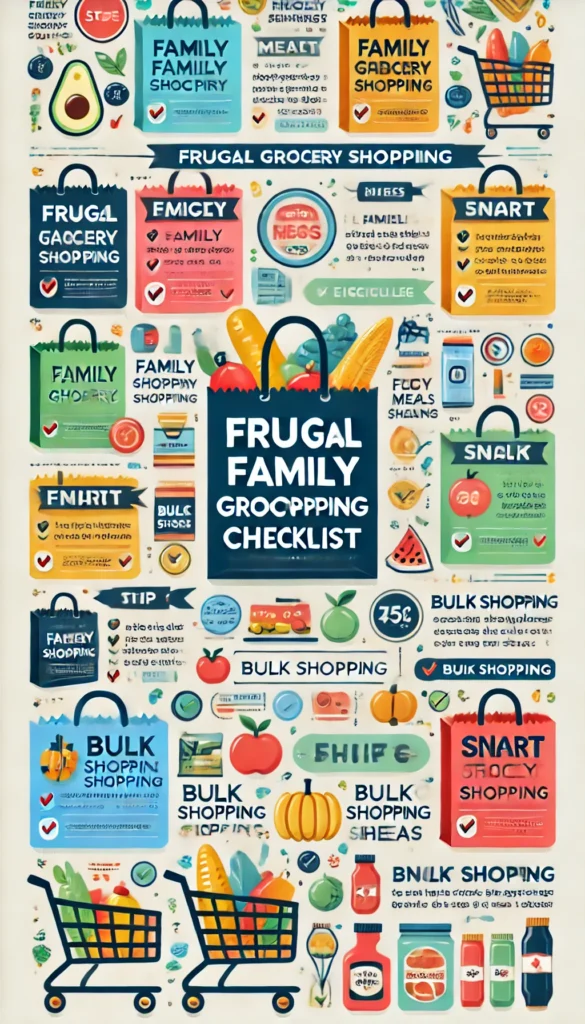
Take a look at the image below, this is a frugal family grocery checking list of cheap recipes to buy and cook, I am not teasing you, just click on the image below or the caption below the image to download the PDF file
Ultimately, implementing these frugal grocery shopping tips for families doesn’t mean sacrificing quality, nutrition, or enjoyment. It’s about being strategic, intentional, and creative.
By thoughtfully planning meals, leveraging discounts, embracing seasonal and generic products, and staying mindful of impulse buying, you’ll achieve considerable savings.
The extra funds can then be redirected toward other family priorities—like vacations, educational activities, or simply treating your loved ones. Your grocery budget needn’t be a stressor.
With thoughtfulness and creativity, frugal shopping becomes second nature—and even enjoyable. Happy saving!
Are you wondering how to grocery shop on budget? Well, let me share some insights!
I enjoyed writing this blog post because I discovered five new grocery-saving tips along the way — perfect for anyone learning how to budget on groceries.
In this article, I’ll focus on grocery savings for a family of four, like me, my wife, and our two kids. If you’re trying to figure out how to food shop on a budget, keep reading.
How to grocery shop on budget
How Much Do You Spend on Food Each Month?
According Global News in Canada A family of 4 spends around $220 Canadian dollars per week on groceries Also, according to USDA Center for Nutrition Policy An average of $770 US dollars per month ~ $192.5 per week on groceries
1) Search for grocery items on sale
We all hate checking weekly store flyers. With daily activities, I’m fully packed and need someone to tell me what’s on sale this week — a great start for how to grocery shop on budget.
That’s why I love an app called Flipp, which lists prices across stores and helps find the cheapest items. You can also clip items for price matching.
reebee is another app like Flipp that helps save money on grocery shopping by searching all sale items and building a shopping cart.
By checking regular items weekly, you can easily save about $24 yearly.
What is Flipp?
Flipp is a mobile app that lets you browse all shopping items It can list the price of any item for all stores This can help you find the cheapest price for your favorite items You can click on the cheap items to clip them – encircle them with yellow for price matching Also on top of Flipp app all items are categorized by types for easy navigation You can also bring all coupons from different stores to use them too
reebee can save money on grocery It is an alternative to Flipp I have both apps on my cell phone It does something similar to Flipp by searching all items You can find the cheapest and add it to your shopping cart Once you add it to shopping cart, it stays there It is similar to clipping in Flipp
I think what reebee is missing You cannot find coupons and offers
Now if you check your regular items weekly You can save easily around $1 per week Assuming your are doing weekly grocery shopping This is $4 per month, let me consider it as $2 only
You will be saving $2 x 12 ~ $24 yearly
2) Write your grocery list
Having a shopping list is a smart way to save money on grocery It is better than roaming through grocery isles If you stick to a shopping list When you go to the supermarket Just find what is on your grocery shopping list
I find a mobile app called Bring Bring is easy to sign in using Apple, Google, Facebook or create your own account It is easy to navigate through all grocery items They are categorized by type Under each type you can find and select your items
Bring app also has something called Inspiration You can add multiple collections Where under each collection You can add part or all of your grocery items list What is really amazing in Bring mobile app you can share your shopping list with family member Using WhatsApp, SMS or email
Assuming by sticking to your list You will be saving 50 cents per week
You will be saving 50 cents x 4 weeks x 12 ~ $24 yearly
3) Get to know the food prices well
Nothing is better than memorizing all the grocery prices It does not take long time Usually Banana is 67 cents At Walmart it is 57 cents Prices are going to stick in your head
Again a mobile app like Flipp helps you knowing the right prices Assuming you can save 25 cents on your weekly grocery list That’s $1 monthly, I will say 50 cents
You will be saving 50 cents x 12 ~ $6 yearly
4) Don’t overspend on grocery coupons
Don’t be lured by using all your coupons Some grocery items you have to store in room temperature Buying with extra coupons cause extra ripe fruits to get rotten Beside rotten fruits infect other ripe ones
5) Plan your meals for one week ahead
Actually planning for a week of meals makes Your grocery shopping process way easier It is good to have all your grocery items written before you go shopping That’s why using a mobile app like Bring will help you
I consider Bring app to be top best app on how to grocery shop on budget Because you can create all different meal courses under collections Every meal contains its grocery items to buy You can review your collections weekly Choose your meals and select all grocery items within those selected meals
6) Visit your supermarket weekly
Again it is awful feeling to realize that You have to visit your supermarket again Because you forgot a couple of items or You went short during the week on regular items Like milk and egg
Assuming you avoid only one extra trip per month to the supermarket That’s $1 monthly at least saving on gas I will say 50 cents
You will be saving $1 x 12 ~ $12 yearly
7) Monitor grocery prices during the week to find best day
I know everybody loves the weekend grocery shopping But go and visit your supermarket during the week and the grocery prices You will be surprised that you can definitely make some savings In fact grocery prices go up in weekend Because supermarkets get packed with customers like you and me
8) Use calculator or at least round up prices for good planning
Rounding up prices is very easy If an item is $1.69 make it $2 If another item is $6.75 consider it $7 Nothing is wrong about rounding down If an item is $1.15 consider it $1
Rounding down will be compensated by up one Now you can sum all your items easily to $2+$7+$1 ~ $10 By doing that You will never find surprises on checkout
9) Don’t be shy to cancel items when checking out
Did it happen to you that you take one of the items to checkout Just to find that it was scanned with a higher price than What you expected or saw on the shelf
You have 2 options here Either the price on the shelf is correct and they have to match it or You read a wrong price I used to be embarrassed and take them But now I am OK to cancel the item
10) Consider buying some groceries in bulk – Costco
Bulk stores like Costco can save you some money on groceries If it happens that you visit Costco store It doesn’t hurt to grab milk and eggs
Check their expiry date Sometimes you will still have time to consume them before expiry
11) Don’t visit supermarket on empty stomach
Although you may have a shopping list But I noticed that if I visit the supermarket while I am hungry I get tempted to buy extra things I won’t need
12) Look around the middle shelves – High and Low rule
Always look higher and lower not only at the middle shelves Grocery stores place high price items in the middle shelves Some shoppers don’t look up or down for different options Consider checking alternatives below or above your items
13) Consider buying the no brand product
Without thinking I know There are no brand products or the label store brand like Great Value at Walmart They are way cheaper You can really save good money replacing your brands with the label store brand
Assuming you save $5 for each weekly visit I would say $5 x 4 ~ $20, I will consider it $15 x 12 ~ $180 yearly
14) Buy vegetables and fruits at different stages of ripeness
Remember you are buying vegetables and fruits for the whole week Not all fruits ripen at the same time For example Green bananas take 3 days to turn yellow So buy bananas at different stages of ripeness
15) Consider looking at expiry or best before dates
Not all grocery items on sale are good to buy Some items are expiring very soon That’s why they are listed on sale So check the expiry date and buy what you will consumer before that date
16) Always check reduced items
I love math and so I leaned this lesson one time If I buy diced tomatoes in certain size It happens that I find the smaller one reduced in price I realized it will be cheaper if I buy multiple packs of the small ones
Lesson learned and I always check any reduced items to save few cash
17) Check unit price for similar items
Compare prices per unit to know what’s actually cheaper — an essential tip for how to grocery shop on budget.
If you see orange juice pack 3.89 L for $5.97 and Another pack 1.75 L for $2.48 The first one is 23¢/100ml The second one is 14¢/100ml The second one is cheaper although it is less quantity
18) Stock up on dried legumes and long life food
There are lot of non expiry items to buy in bulk When they go on sale like Rice, Pasta, Sugar and Tea Buy them and stock them in kitchen cupboard or in the garage
Assuming you save $5 each month I would say $5 x 12 ~ $60 yearly
19) Store food properly at home
Learn how to store food to avoid spoilage and waste — part of how to budget on groceries effectively.
Ready to eat food can be stored at the top of the fridge Raw meat, poultry and fish should be sealed and stored in the freezer Vegetables and legumes should be stored in plastic bags in crisper of your fridge
Fruits should be kept outside but keep an eye on them so they don’t get rotten If one fruit gets rotten and touching other fruits, it will infect them all Get rid of the rotten one immediately
20) Prepare your own meals
Preparing all your meals for dinner Save you money from eating at restaurants
Assuming you save two nights dinner at restaurants per month for a family I would say you could save $40 for each dinner ~ $80 Saving $80 x $12 ~ $960 yearly
21) Take your leftover dinners and eat them for lunch
Always keep the dinner leftover for next day lunch This will save you money from buying lunch at work
Assuming you save $5 for lunch x 5 days a week That’s $25 x 4 ~ $100 per month You would save you $100 x 12 ~ $1200 yearly
22) Compare packaged vegetables and fruits when buying them per weight
Sometimes buying large package of oranges saves you money Than buying individual oranges per weight
Same thing for green and colored peppers For small cucumber it is the other way around Buying individual per weight is cheaper than buying packages
There is no rule you have to compare the prices and make up your mind
23) Plant your own vegetables and fruits
If you are into gardening Sometimes planting the seeds for Tomato and peppers in spring Picking them from your garden in Summer can save you few cash
24) Stick to buy essential products from supermarket
Food items like milk or egg is not recommended to buy them from convenience stores or gas stations They are expensive there
Always check your fridge for regular recurring items like Milk or eggs Make sure you have got enough of them for the next weekly trip to your supermarket
25) Pay with cash back credit cards
Some credit cards give you cash back up to 4% on grocery items It is better to pay with these cards
Assuming you pay $450 per month for groceries That’s $450 x 12 ~ $5400 yearly x 4% ~ $216 savings of groceries If you pay $90 annual fees then you save $216 – $90 ~ $126 yearly
26) Consider upgrading your Costco membership for better saving
This one I did not think about it Until one day at Costco while renewing my membership card Associate there suggested to upgrade to Costco executive I asked what if I make less than $120 ~ $135 after tax He told me Costco will pay the difference between both memberships
This year I made 101$ so I paid $34 Think about it this way If I pay $67.5 and I don’t get any cash back rewards While I can pay $135 and I get back whatever So I am renewing my membership with less than $67.5 yearly
Assuming you collect $75 cash back from executive membership Then you save $10 yearly when renewing your membership
27) Buy non grocery items like detergents from discount or bulk stores
Not only detergents but shampoo, body wash, creams and diapers These items are recommended to buy from Costco You can stock whatever quantities you would like if they are on sale
You will pay more if you get them from supermarket stores Assuming you save $20 per month difference between Costco and supermarket stores You would save $20 x 12 ~ $240 yearly
28) Shop in supermarkets that do price match
As I mentioned earlier some supermarkets like Walmart they do price match I recommend you check for your grocery items to see their prices in different stores
Yes I know it sounds unrealistic and I wouldn’t ask you to do that If I find it hard but with Flipp or reebee searches are super easy
If you manage to save 50 cents per week That’s 50c x 4 ~ $2 per month You would save you $2 x 12 ~ $24 yearly
29) Try grocery shopping alone without kids
Not only because kids can nag for candies and chocolates But sometimes they can be distracting
If you have the option to leave the kids with the spouse and you go and finish your grocery shopping That would be great and convenient for you
30) Bring your own bags
Every time you buy groceries you need at least 2 bags Grocery stores charge now 5 cents per bag
If you can bring your own bags You would save 10 cents per week
That’s 10 c x 4 ~ 40 cents per month You would save you 40 cents x 12 ~ $5 yearly
31) Choose one or two days to go meatless
Although going vegan started to be popular Some people started to try meatless meals at least once per week
If you are eating meat, poultry or fish for 6 or 7 days a week Take it one day down and you will not feel it
If you save one day going meatless That’s $10 per week x 4 ~ $40 per month You would save $40 x 12 ~ $480 yearly
32) Buy large freezer to stock meat when on sale
This is a weird advice as I suggest to cut items Here I am suggesting you to buy extra large freezer
You have to think why I am telling you that Usually your fridge comes with an upper or lower freezer attached to it It won’t be enough to stock all you need Investing in a freezer lets you buy and store meat, poultry and fish on sale — smart how to budget on groceries thinking.
33) Buy the cheap cut meat
Some special cuts for meat are expensive I know you may know that But If you are buying your meat to cook with legumes It won’t make any difference if you buy the cheap cuts of meat
34) Save money by cutting alcohol
I know it is tempting to grab wine bottles or pack of beer When doing your grocery shopping In Canada recently it started to have wine and beer in all grocery stores While in US they are always selling alcohol everywhere
According to National post in Canada, roughly 80% of Canadians drink alcohol and According to Washington post 12.7% in U.S. are diagnosed with alcohol use disorder
35) Save money by skipping nuts and junk aisle
Nuts are expensive and some junk like chip bags I personally don’t buy unless I have a party I am telling you that because when you come back from work You will take sometime to prepare your dinner It can be tempting to eat chips and nuts till your dinner gets ready
36) Save money by drinking tap water
There is nothing wrong if you get used to drink tap water Unless you live in an area with high sodium level You will not save much but it is just good practice
37) Save money cutting soda, soft drink and sparkling water
I am not against soft drink but I ask you to control the amount you consume Long time ago I bought a pack of 32 from Costco and I don’t remember how long it stayed in my garage I would say easily 6+ months I even control my kids drinking pops
38) how to grocery shop on budget using grocery rewards mobile app
Before the great jump in mobile technology People used to search flyers and cut coupons
Now with mobile apps, you can search for all coupons across all nearby supermarkets Find what suits you and save it for redeeming in grocery stores
There are more mobile apps than what I listed below but these are considered top grocery rewards I will describe them in brief to show you how to budget on groceries
Ibotta
Available in the US only It works by looking for coupons for things You want to buy in specific store You go and purchase them then Scan the QR code at the bottom of the receipt Don’t worry you can use your mobile camera to scan the QR code
Available in the US only It works by finding offers for your favorite grocery store You buy and pay then upload the receipt by camera You will be paid in your mobile app account in hours
Checkout 51
Available in US and Canada Checkout 51 works similar to Saving Star but offers are across all grocery stores Meaning if you find cash back on apples It would be across all supermarkets
Same thing you pay for your items Scan the full receipt using your mobile camera You will be paid on your account in hours You can request payment by check when you accumulate $20
Available in US and Canada Receipt Hog is similar to Checkout 51 But no specific offers there You just scan your receipts Take a picture from your mobile phone camera and upload it Receipts cannot be older than 2 weeks
Also Receipt Hog provides you some little cash When you answer some surveys
Available in US and Canada You choose the grocery store near you Browse through coupons Add them to your shopping list Collect your savings by clicking on Post a Brag on the app
I hope these tips help you master how to grocery shop on budget more effectively. If you have other tips to share, drop a comment below and share this post with friends on social media!
Just comment below to notify me and don’t forget to share it with your friends using social media to the left or mobile (bottom)
Electricity bills can take up a significant portion of your monthly expenses. The good news? There are simple yet effective ways to lower your electricity usage and save money, especially when focusing on how to save electricity in the summer.
Below, I’ve compiled 31 smart energy-saving tips—some are completely free and easy to follow. Let’s dive in!
How to Save Electricity in the Summer
1. Turn Off Unnecessary Lights
LED bulbs consume up to 75% less power than traditional incandescent bulbs. Teach your kids this practice too.
If this is hard to control, consider motion sensor lights to automate the process.
2. Use Natural Daylight
Sunlight is free and benefits your health.
Additionally, it enhances our overall well-being.
If you’re out working on weekdays, take advantage of daylight on weekends.
3. Switch to LED Bulbs
LED bulbs use up to 75% less energy compared to traditional incandescent lighting.
Furthermore, they last longer.
A pack of 24 Sylvania LED bulbs costs around $23.46, making them a cost-effective choice.
Check with your utility provider for specific off-peak hours.
Actually this is the top tip on how to save electricity in the summer
5. Unplug Unused Electronics
Even when turned off but still plugged in, devices continue to consume energy.
This phenomenon is known as phantom energy or vampire power.
Unplug items like chargers and appliances when not needed.
6. Use Smart Plugs
Worried about leaving appliances on? Smart plugs allow you to turn them off remotely via smartphone.
You can connect your iron, TV, or lamps to smart plugs and control them easily using Alexa or Google Assistant.
Actually this is one of the top tips on how to save electricity in the summer
7. Invest in Energy-Efficient Appliances
Look for Energy Star-certified appliances like refrigerators, dishwashers, and washing machines. These use significantly less electricity than older models.
8. Switch Off Air Conditioners When Away
If you’ll be out for more than 2-3 hours, switch off your AC to save energy.
This simple step can help you on how to save electricity in the summer and lower your bill
9. Choose Ceiling Fans Over Air Conditioning
On mild days, ceiling fans can replace your AC, cutting cooling costs by up to 99%. Set fans to spin counterclockwise in summer and clockwise in winter for better air circulation.
10. Use Window Blinds and Curtains
Blinds can reduce solar heat by 60%, keeping your home cooler in summer and reducing AC usage — a must for anyone looking at how to save electricity in the summer.
11. Check for Air Leaks and Weatherstripping
If you feel drafts around windows and doors, apply weatherstripping to seal gaps. This reduces heating and cooling costs.
12. Don’t Block Radiators
Keep radiators clear of furniture or curtains to let heat flow freely.
13. Close Unused Room Vents
Closing floor registers in unused rooms ensures more efficient heating and cooling in occupied spaces.
14. Switch to a Microwave Instead of Using Oven
Microwaves use much less energy than traditional ovens, making them a cheaper option.
15. Peek Through the Oven Window
Each time you open the oven door, you lose 6°F of heat.
Use the oven window to monitor your food.
16. Hibernate Your Laptop
Switch off laptops when not in use or put them in hibernate mode to conserve energy.
17. Install a Smart Thermostat
Smart thermostats like Ecobee or Nest let you program schedules and adjust temperatures remotely, saving money on heating and cooling.
18. Use Dimmer Switches
Dimmers allow you to adjust brightness levels, reducing energy use and extending bulb lifespan.
19. Wash Clothes in Cold Water
Washing with cold water works well for most loads and uses less energy than hot water.
20. Run Full Loads in Dishwashers & Washing Machines
Running full loads reduces the number of cycles, cutting water and electricity use.
21. Clean Your Dryer’s Lint Filter
A clogged lint filter reduces dryer efficiency. Clean it after every load to improve performance.
22. Air-Dry Clothes in Summer
Let your clothes dry outside naturally in warm weather — an effective way how to save electricity in the summer.
23. Clean Clogged Air Ducts
Professional duct cleaning improves heating and cooling efficiency, reducing energy waste.
24. Check the Seal on Fridges & Freezers
Faulty seals leak cold air, making your fridge work harder. Test seals by placing a piece of paper between the door and the fridge—if it slides out easily, it’s time for a replacement.
25. Lower Your Water Heater Temperature
Set your water heater to 120°F (49°C) to prevent unnecessary heating costs.
26. Shut Off Your Water Heater During Vacations
If you’re away for an extended period, switch off your water heater to avoid wasted energy.
27. Replace Furnace Filters Regularly
Dirty furnace filters force your system to work harder, leading to higher electricity costs.
28. Take Shorter Showers
Take showers lasting 10 minutes or less to cut down on water use and energy expenses.
29. Install Low-Flow Showerheads
These reduce water and heating costs without compromising water pressure.
30. Use Solar-Powered Devices
Charge phones and small electronics with solar-powered chargers like the ADDTOP solar charger.
31. Track Your Energy Usage
Use an energy monitor like Sense Energy Monitor to track power consumption and identify areas to save.
Final Thoughts
Small daily adjustments and using energy-efficient tech can greatly reduce your electricity costs.
If you’re wondering how to save electricity in the summer, start by focusing on cooling habits and unplugging unnecessary devices.